
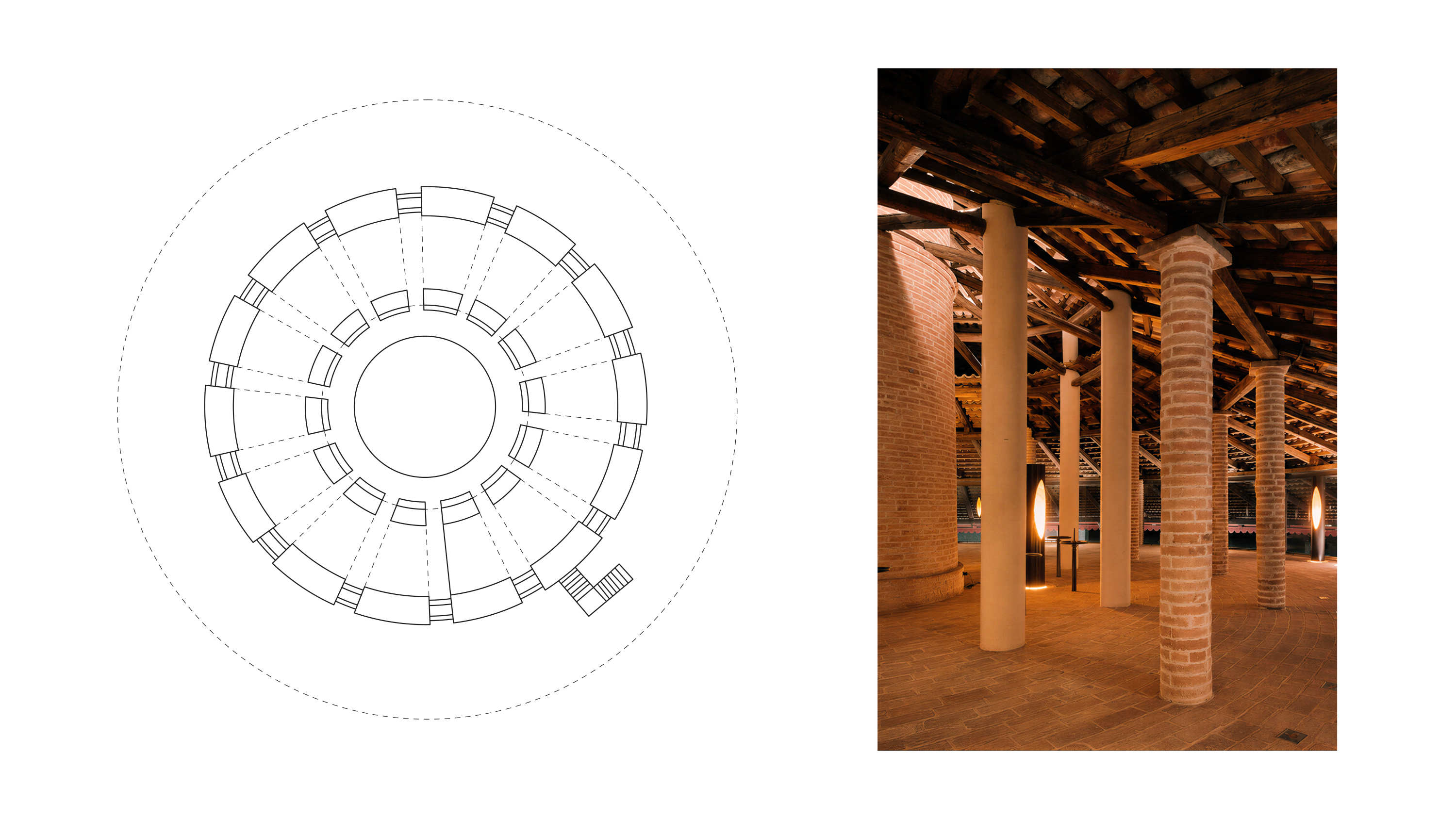
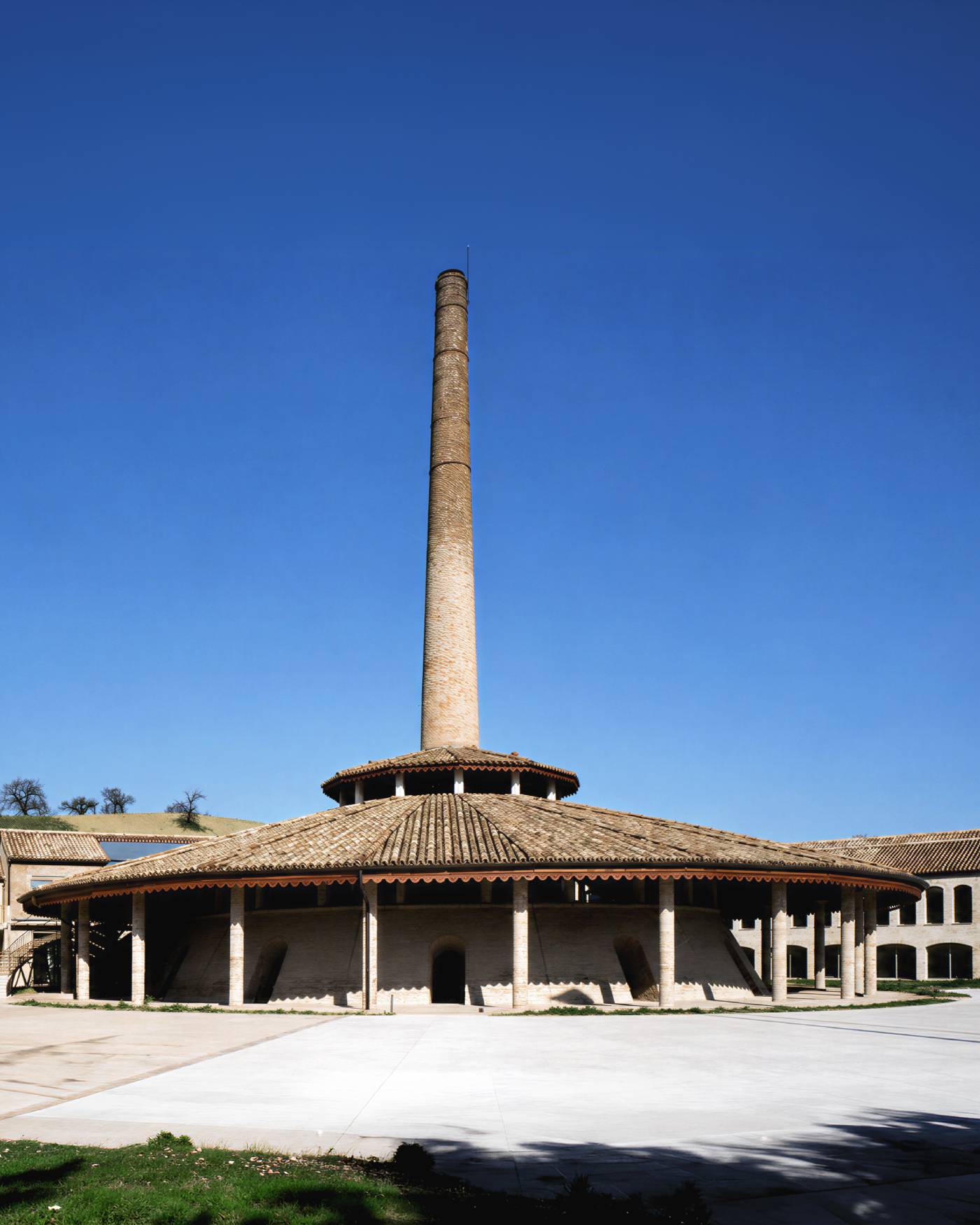
Fornace Hoffmann - Serra de' Conti
One of the rarest and best-preserved monuments of industrial archaeology in Italy, the Hoffmann Furnace in Serra de’ Conti was built in 1884 in a strategic location rich in water and clay, ideal for brick production. Its success was due to the adoption of the continuous-cycle firing system invented by Friedrich Hoffmann, which allowed bricks to be fired non-stop, optimising heat and fuel consumption.
After decades of neglect, a meticulous private conservation project has saved the monumental structure from decay. Today, the kiln, with its striking ring-shaped galleries and historic chimney, is no longer a place of labour but a spectacular cultural and exhibition space that preserves the memory of the Marche region’s transition from craftsmanship to industry.
The beating heart of the entire building is undoubtedly the large ring-shaped kiln gallery. Walking through it, you are enveloped by a continuous succession of imposing vaults and walls built entirely from the original red bricks of the period. Whilst the lower gallery preserves the factory’s most authentic spirit, the upper floors and the old drying rooms tell the story of its second life. The vast spaces where the burners once operated have been completely reimagined: the old wooden trusses and original load-bearing pillars now coexist with minimalist industrial resin floors and designer walkways. The result is an airy, multi-purpose environment where contemporary light interacts with the traces of the past, transforming a former place of hard labour into an evocative cultural space.
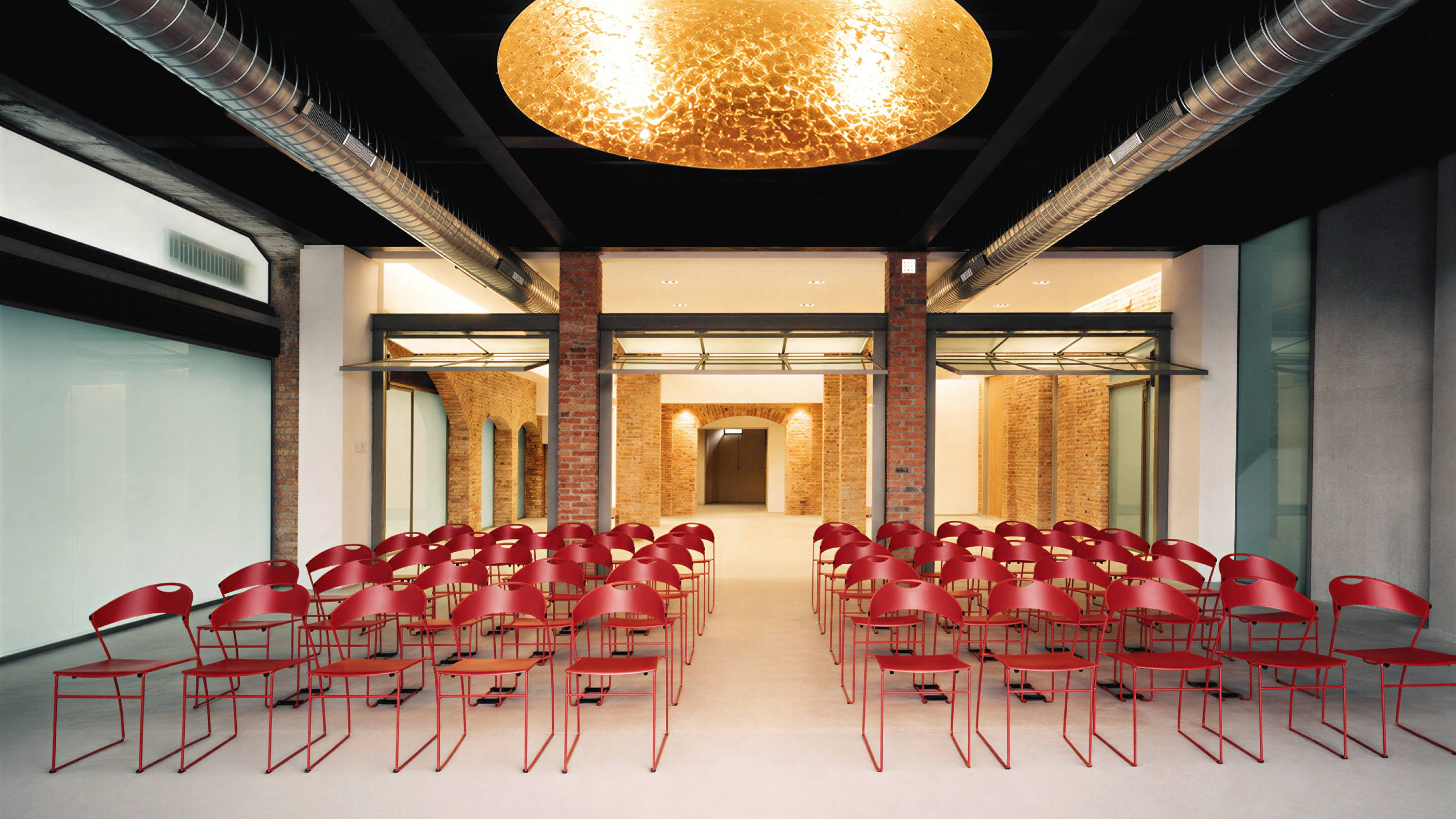
Inside the Hoffmann Furnace, the rigour of industrial archaeology engages with international design through the presence of the Juliette chairs, designed by Hannes Wettstein for Baleri Italia.
Characterised by a slender steel frame and extremely minimalist lines, these designer chairs were chosen to furnish the upper multi-purpose spaces of the former factory. Their use reflects a deliberate aesthetic choice: the chair’s geometric lightness and contemporary style create a fascinating visual contrast with the monumental weight of the rough-hewn bricks and the imposing original vaults. The fact that they can be stacked and moved with extreme ease allows for the creation of intimate or spacious seating areas, depending on requirements and occasions.
Now used to accommodate guests during conferences, exhibitions and cultural events, the Juliette chairs demonstrate how a former industrial site can be transformed into an elegant modern art gallery, where historical heritage blends with comfort and cutting-edge design.